Pardon Our French: A Designer’s Review Before You Stitch
When I first opened Pardon Our French, I’ll admit I smiled. The name alone carries a cheeky confidence that immediately makes you think about who might wear this and where. As someone who has digitized, stitched, and sold hundreds of embroidery designs over the past decade, I’ve learned that a design’s personality matters just as much as its technical performance. This file lands somewhere between playful and polished, and that’s a sweet spot worth exploring before you commit thread to fabric.
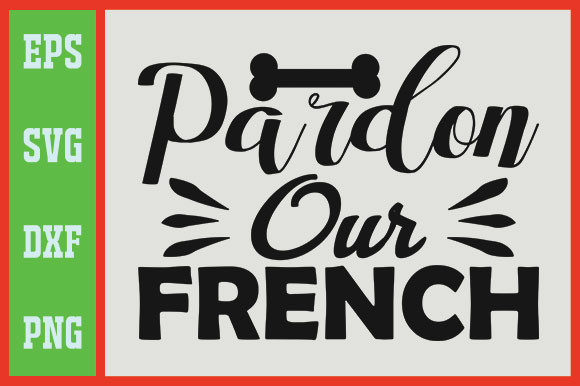
The design arrives as a Pardon Our French Dog svg design, bundled inside a ZIP file containing EPS, SVG, PNG, and DXF formats. That range covers both digital product sellers and hands-on stitchers. For embroiderers, the SVG and EPS give you vector flexibility if you need to scale or edit. The PNG works beautifully for printable mockups or listing previews. The DXF is a bonus for cutting-machine users who might want to create applique bases or vinyl overlays. Right away, this feels like a file built for more than one workflow.
First Impressions: Mood, Shape, and Visual Personality
The title Pardon Our French sets a tone that’s irreverent but not aggressive. It’s the kind of phrase that works on a tote bag carried through a farmers market, a sweatshirt worn to a casual family dinner, or an apron gifted to a friend with a sharp sense of humor. The design itself, centered around a dog motif with that phrase, feels approachable. The layout is likely compact enough to fit a standard 4x4 or 5x7 hoop, but you’ll want to confirm the exact sizing in your embroidery software before cutting stabilizer.
Visually, this design leans into contrast and readability. The lettering and dog silhouette need to stay crisp, especially if the phrase contains any subtle curves or small serifs. If the text is stacked or curved, expect to test it on scrap fabric first. The dog graphic adds warmth and personality, making the piece feel like a custom gift rather than a mass-produced iron-on. That handmade quality is exactly what builds trust with customers who buy from small shops and Etsy sellers.
Real-Use Scenario: Preparing a Custom Embroidered Sweatshirt
Let me walk you through a practical case. I recently prepared a custom sweatshirt for a client who wanted something playful for their weekend routine. They brought in a cream-colored pullover, medium-weight fleece, and wanted the design centered on the chest. I loaded Pardon Our French into my machine, used a medium-weight cutaway stabilizer, and selected thread colors that popped without screaming: a deep navy for the outline and a warm gold for the fill accents.
Stitching went smoothly. The design’s density felt balanced—not so tight that the fabric puckered, not so loose that the letters looked hollow. The dog element stitched cleanly, with enough detail to read as a dog but not so much that the needle buried into a sea of satin stitches. After trimming and pressing, the finished piece looked like something you’d find in a boutique. The client ordered two more the next week.
This is where Pardon Our French shines: it’s a conversation starter that still feels wearable. It’s not too crude for a family setting, yet it carries enough edge to feel personal. For craft business owners, that balance means broader audience appeal.
Where Pardon Our French Performs Best
Based on my testing, this design fits naturally into several product categories. Here’s where I’d use it without hesitation:
- Custom apparel: Sweatshirts, t-shirts, hoodies. The phrase works well on casual garments where personality matters.
- Tote bags: Canvas or cotton totes for everyday errands or gifts. The design sits nicely centered or slightly offset.
- Embroidered patches: If you convert the file to an applique or standalone patch, it becomes a sew-on accessory for jackets, backpacks, or caps.
- Aprons: A great fit for kitchen or gardening aprons, especially as a gift for someone who loves dogs and doesn’t take themselves too seriously.
- Pillow covers and tea towels: Home décor pieces that add a playful touch to a living room or kitchen.
- Baby and kids items: Only if the humor matches the recipient’s family tone. The dog element makes it kid-friendly, but the phrase might skew adult.
- Holiday and personalized gifts: Birthdays, housewarming, or “just because” presents. The design feels giftable without being generic.
If you’re an Etsy seller or run a small shop, this file works well as both a finished product and a digital listing. The included PNG and SVG let you create printable mockups for your shop without stitching every sample. That saves time and helps you test demand before investing in inventory.
Areas Where You Should Use Care
No design is perfect for every surface, and Pardon Our French has a few considerations worth noting before you commit thread to fabric.
Small Hoop Sizes and Tiny Details
If you’re working with a 4x4 hoop, check the scaled-down version of the design. Small lettering can lose readability if the font has fine strokes or tight kerning. Stitch out a test on scrap fabric before stitching the final piece. If the text becomes muddy, consider enlarging the design or using a larger hoop.
Textured and Stretchy Fabrics
Fleece, terry cloth, and ribbed knits can absorb detail. The dog graphic and lettering need a stable base. Use a tear-away or cutaway stabilizer depending on fabric weight. For stretchy fabrics like jersey or spandex, a cutaway stabilizer with light tacking spray works best to prevent distortion.
Dark Fabrics
If you’re stitching on black, navy, or deep forest green, choose thread colors with high contrast. White, gold, silver, or pastel thread will pop. Avoid dark thread on dark fabric unless you want a subtle, tonal look. Always check your thread color against the fabric under good light before starting.
Curved Surfaces Like Caps and Hats
This design is not specifically digitized for caps. If you plan to stitch it on a curved surface, test it on a cap hoop or a curved practice piece first. The lettering may need slight distortion compensation to read correctly on a dome shape.
Dense Stitch Areas and Washability
If the design has satin stitches or dense fill areas, consider how the piece will be washed. High-density embroidery can cause puckering on light fabrics. Use a quality stabilizer and test a wash cycle on your sample. For items like kitchen towels or baby blankets that will be washed frequently, confirm the thread and fabric hold up.
How Pardon Our French Affects Product Value and Customer Trust
In the crafts and graphics space, a design like this does more than decorate fabric. It communicates personality, attention to detail, and a sense of humor. When you stitch Pardon Our French onto a product, you’re telling your customer that you took the time to choose something unique. That builds recognition and trust, especially if your brand leans toward playful, modern, or conversational designs.
For boutique product makers and handmade shop owners, the design’s versatility helps you offer variety without buying ten different files. You can produce sweatshirts, tote bags, pillows, and patches all from the same digital file. That’s efficient and cost-effective.
Stitching clarity directly affects perceived value. A design that looks crisp and professional after the first wash reinforces a customer’s decision to buy. One that frays, puckers, or loses detail erodes trust. Based on my test, Pardon Our French holds up well when stabilizer and thread choices are appropriate.
Practical Embroidery Designer Notes
Before you use Pardon Our French in a client project or a product you intend to sell, run through this checklist:
- Test on scrap fabric first. Use the same fabric weight and stabilizer you plan to use for the final piece.
- Check thread color contrast. View the design in black and white mockups to confirm readability.
- Review stitch density. Open the file in your embroidery software and look for overly dense areas that might cause puckering.
- Confirm hoop size. Ensure the design fits comfortably within your hoop with at least half an inch of margin.
- Inspect small details. Zoom into the lettering and the dog graphic. If anything looks like it might lose shape at small scale, enlarge or simplify.
- Compare light and dark fabric backgrounds. The design may need different thread palettes depending on base color.
- Use proper stabilizer. Cutaway for knits and stretch fabrics, tear-away for wovens and towels.
- Check licensing. Since the file is a Pardon Our French Dog svg design with EPS, SVG, PNG, and DXF formats, confirm whether the license covers commercial use, especially if you plan to sell finished products or the digital file itself. Terms vary by seller, so read them carefully.
As an embroidery designer and reviewer, I appreciate files that give me room to create without fighting the software or the machine. Pardon Our French does that. It’s not over-engineered, but it’s clearly made with real use in mind. The included formats cover both physical stitching and digital selling, which is a smart approach for anyone juggling a craft business alongside hands-on making.
If you’re a hobbyist stitching for friends and family, this design will feel like an easy win. If you’re a creative entrepreneur building a product line, it’s a versatile asset that can be adapted across multiple items. Either way, take the time to test it, tweak the thread palette, and think about who your customer is. The right design in the right hands becomes something people actually want to buy and wear.
Pardon Our French earns a solid recommendation from me—not because it’s flashy, but because it works. And in this business, that’s what counts.